
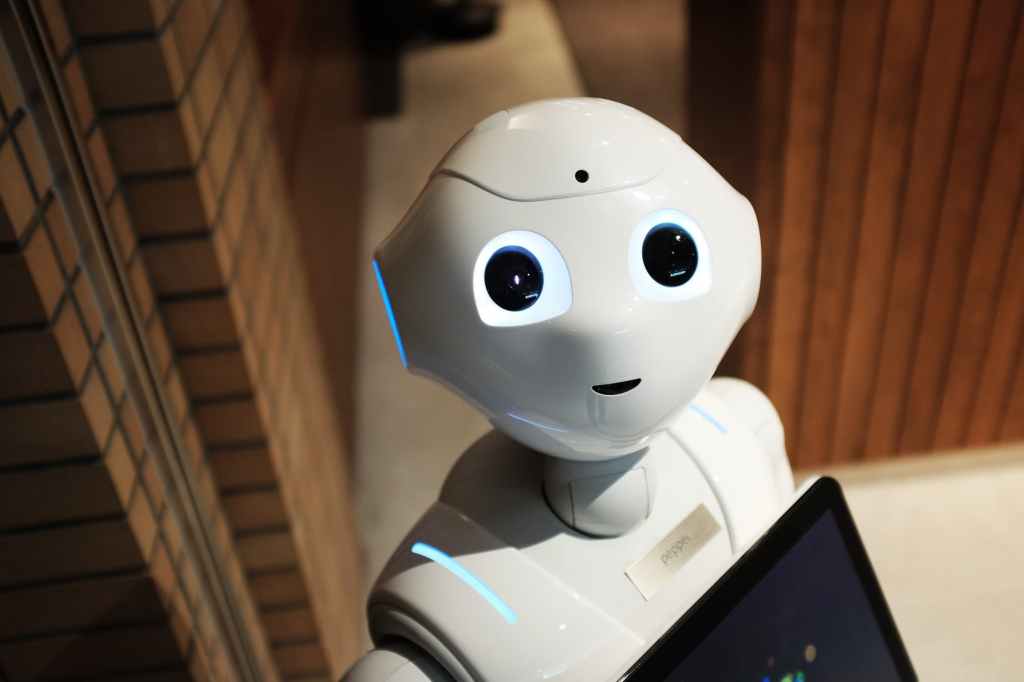
How has AI evolved over the past 70 years? (specify AI technologies)
Artificial Intellegence has come far since the 1950s. The technology originally was made with the intention to mirror basic human reasoning using problem solving and symbolic methods. Today, artifical intelligence stays true to these concepts and is far more advance and common in our everyday life. It is integrated into a lot of our workforce. In industries like healthcare, manufacturing, banking, and retail, AI technology is common and necessary.
– What did you learn from the 3 industry videos?
> How has AI changed the industry?
The integration of AI into most industries helps with efficiency. Whether it be work efficency or cost efficiency, the workforce is incorporating robots into positions that normally could have been occupied by humans. As seen in the videos, AI is able to fill roles that may have a shortage of workers. This being the truck driver industry. Autonomous truck driving is compensating for the lack of truck drivers in recent years, all while bringing down the cost of shipping goods. In the ‘Future of Farming’ video, there is new technology that allows the proccess of food collecting on the farm to be quicker, almost 2x faster than a human worker. In other videos, hotels are able to expand further using AI staff. Almost the entire proccess of checking into the hotels was by artifical intellegence, from the check in desk, to bringing the bag to the room, to turning off the lights.
> What issues has AI created for the worker?
In some instances, AI technology is more efficent at certain jobs than the human counterpart. We see in the videos, robots occupying jobs that originally where assigned to humans. It is explained in ‘Inside the Japanese Hotel Staffed by Robots’, that this is not only a fun new way to have hotels run, but also means to make more profit. To quote, “As a consumer, we’re going to forced to love robots. They’re going to be packaged up as dinosaurs but for the people driving this innovation, it’s really capital thats doing that.” (11:00.) However, there is still a need for human workers, as the hotel manager, Akikazu Fukumoto pointed out in ‘Inside the Japanese Hotel Staffed by Robots’, “You have to respond to the needs and thoughts of the customer, so the spirit of hospitality still requries human interaction” (3:00) As Mr. Fukumoto is trying to say, there is some jobs and services that AI, as they are developed today, can not provide.
– What will be AI’s impact on society in 2030? (Provide your personal opinions)
> Our personal life
Our personal lives will likely become a lot more simplified and efficent with the help of AI. Just as how the internet and technology became integral parts of our lives, I feel artifical intellegence will do the same. For example, our homes become smart houses will change how we live and exists in our own homes. The services and companies we buy from will be using AI technology, so we will be benifitting from that as customers.
> Our interactions
The way we interact with others may change as there will surely be less of it in the future. Things like customer service is already almost all automated today when you call in with issues about a product. Further into the future, there will be less of a need to interact with others out of necessity.
> Your professional career
AI poses a threat to a lot of the worlds job security and I feel this is a really big problem that not a lot of people are addressing. Ulitmately capitalism relies on making the most amount of money while having the least amount of expenses. If humans become unnessisary expenses, most companies will opt for the more cost effective option, that being artifical intellegence.
> What types of technologies/services do you envision seeing related to AI?
I envision the medical field and manufacturing field being for the most part being occupied by Artifical Intellegence. I would hope AI will be incorperated more into space exploration because it would be very useful in this realm.
 Deana Goslin's Blog